Hydrodynamic Simulations of Galaxy Evolution
I was tasked with modeling the complex thermodynamic evolution of the Circumgalactic Medium (CGM)—the massive, ionized halos that surround galaxies—to understand how heavy elements ("metals") influence star formation and structure. The goal was to simulate billions of years of galactic history to determine if our current theoretical models held up under extreme, high-metallicity conditions.
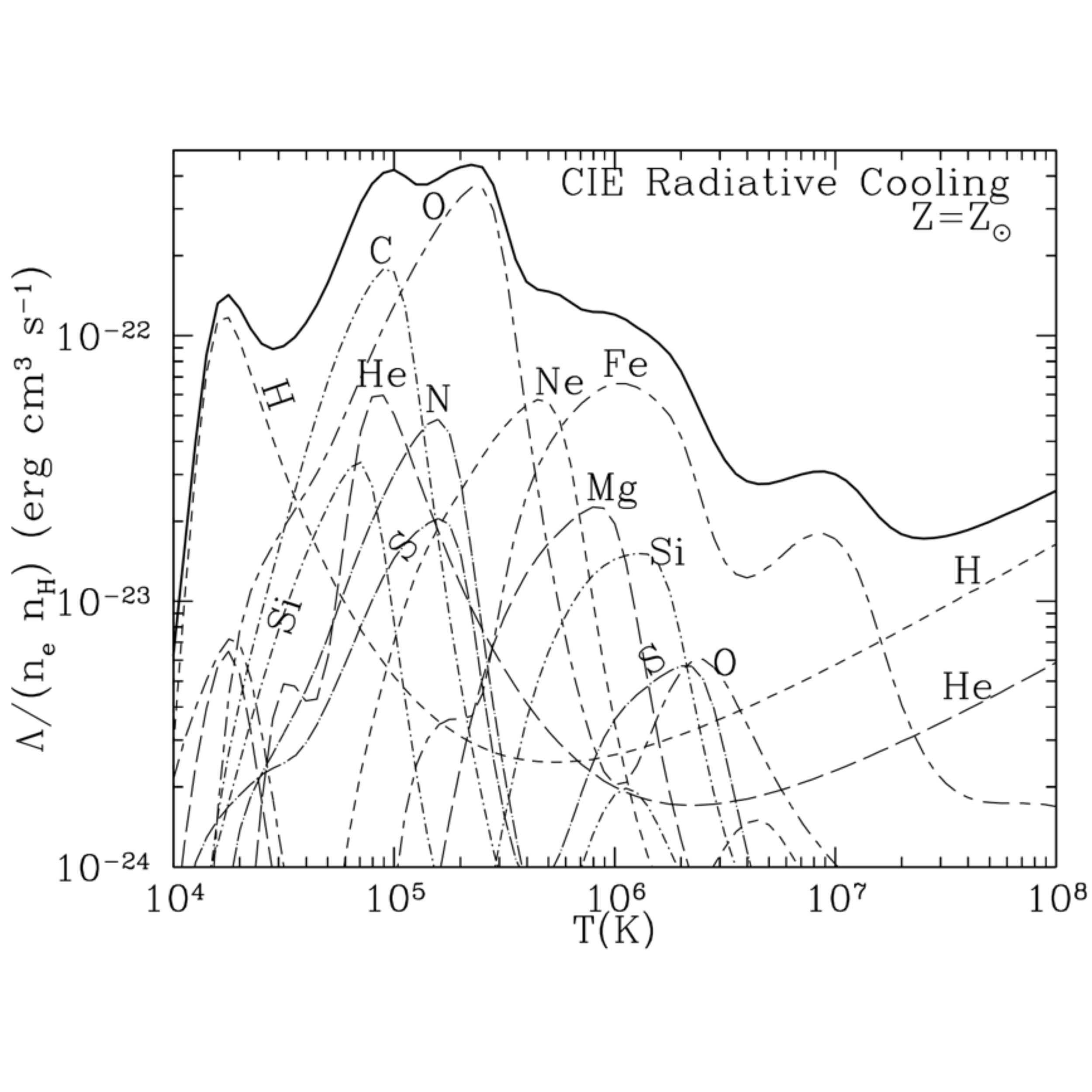
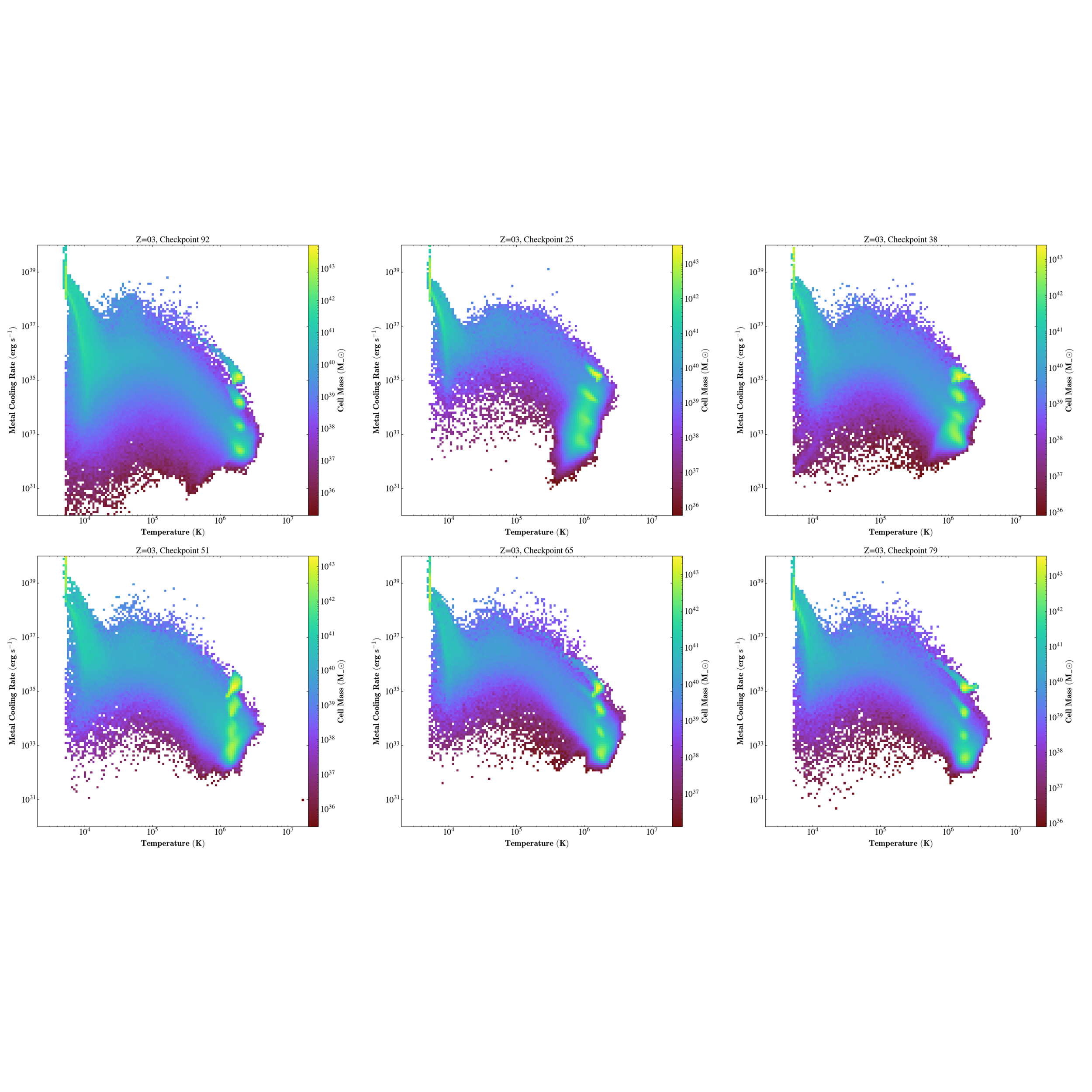
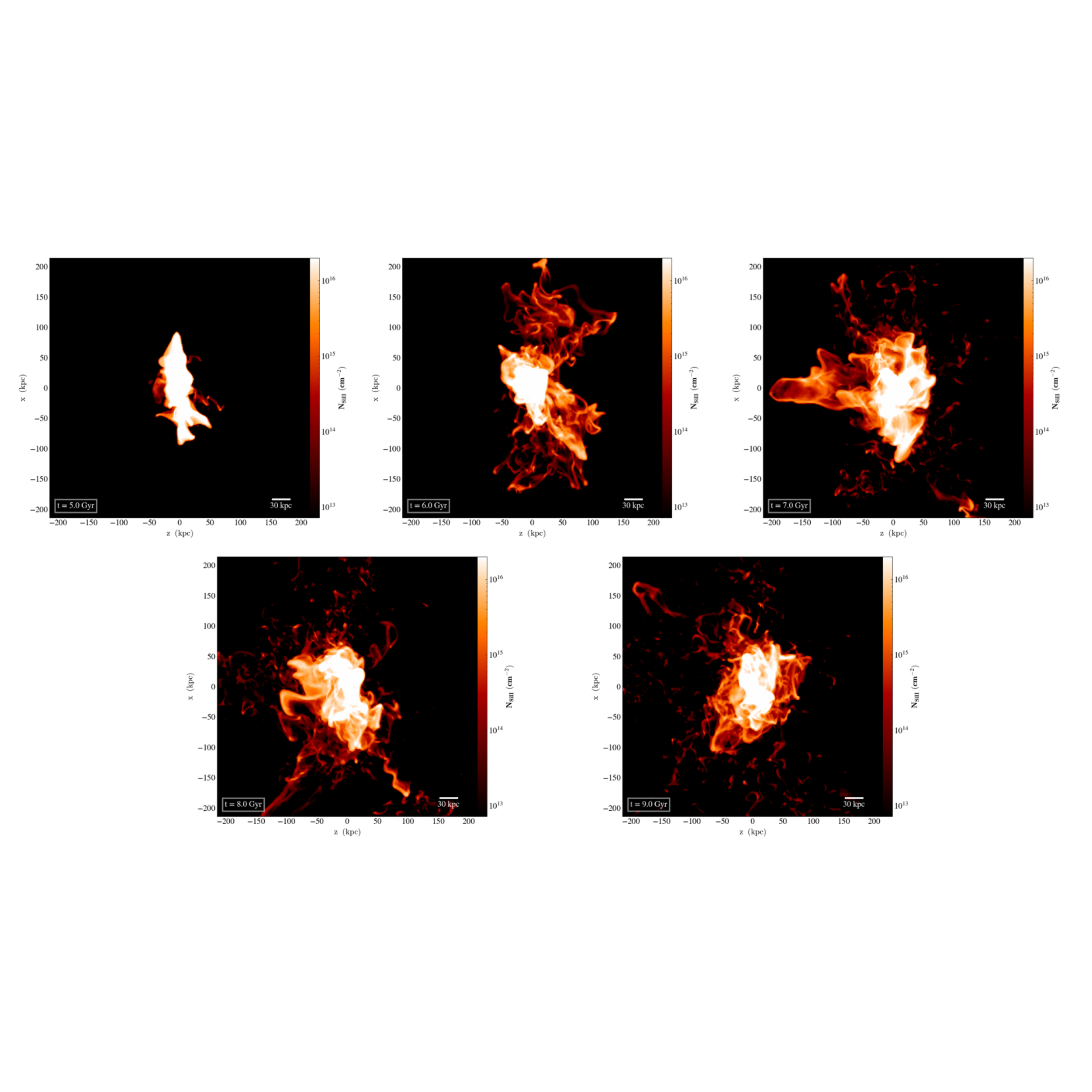
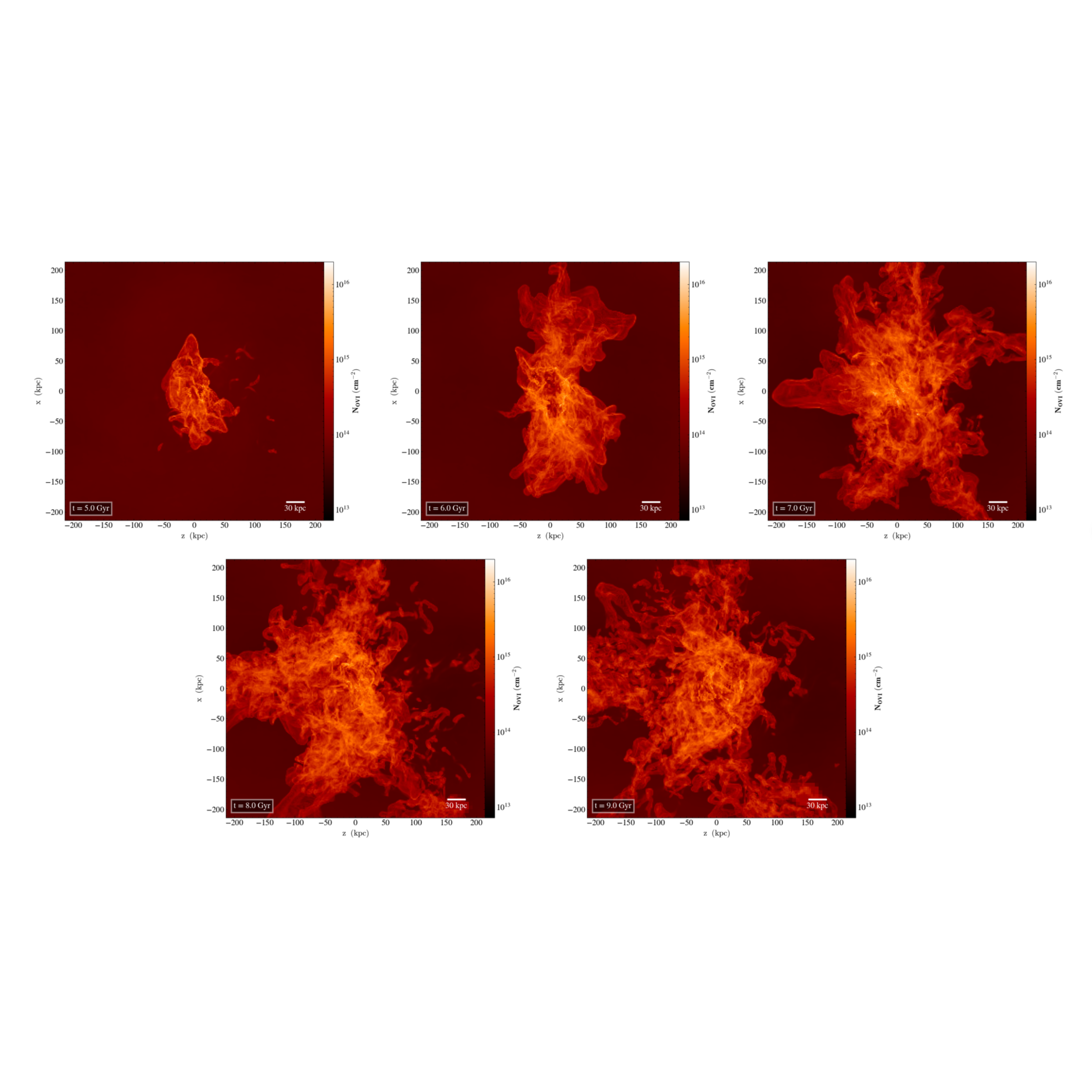
Using the MAIHEM hydrodynamic code on NASA and Purdue supercomputing clusters, I orchestrated large-scale 3D simulations of galactic halos incorporating magnetic fields, turbulence, and non-equilibrium chemistry across 65 distinct ionic species. I designed the experiment to rigorously isolate metallicity as an independent variable, running comparative models of Solar metallicity versus sub-Solar metallicity environments to track the precise cooling rates and spatial distribution of matter over a 3-billion-year timeline.
The analysis yielded a counter-intuitive breakthrough: contrary to standard predictions, the metal-poor environments cooled more efficiently than the metal-rich ones. By diving deep into the simulation data, I identified that this anomaly was driven by a subtle interplay between gas density and the ionization parameter (U), proving that hydrogen cooling mechanisms become dominant in unexpected ways. These findings validated niche theoretical models regarding the balance of radiative cooling in the interstellar medium.
This project allowed me to operate at the intersection of theoretical astrophysics and high-performance computing, taking a massive, chaotic dataset and extracting a clear, causal physical narrative that advances our understanding of cosmic evolution.